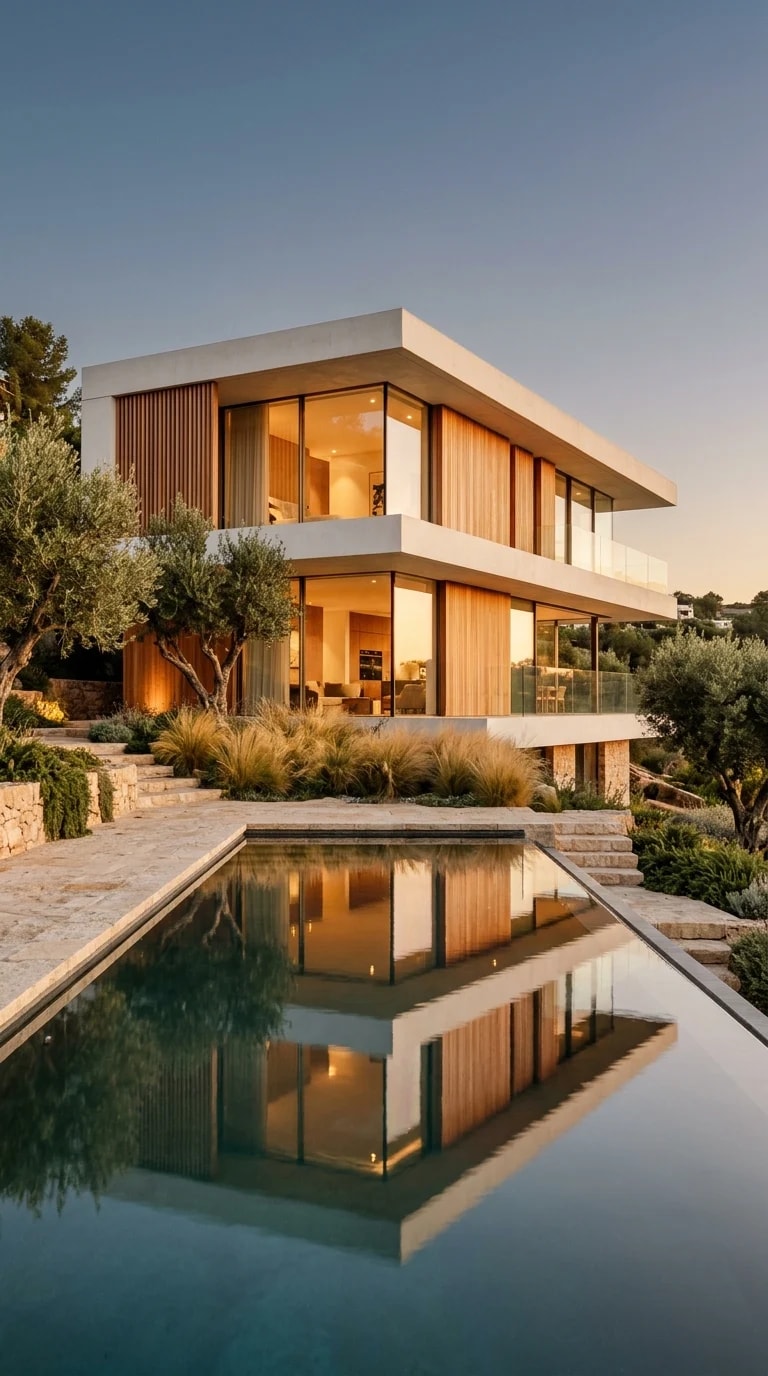
Most exterior plans are drawn for noon, when sunlight flattens everything into a single bright plane. The real test comes later, in that half hour when the sky turns blue-grey and the interiors switch on. This two-story house was clearly designed for that moment: a flat roof holds a calm horizontal line, floor-to-ceiling glass lets the inside read as a warm lantern, and a mirrored pool doubles the whole composition in the foreground. Good home design outside is not only about materials in daylight. It is about deciding what the house will look like when people actually come home.
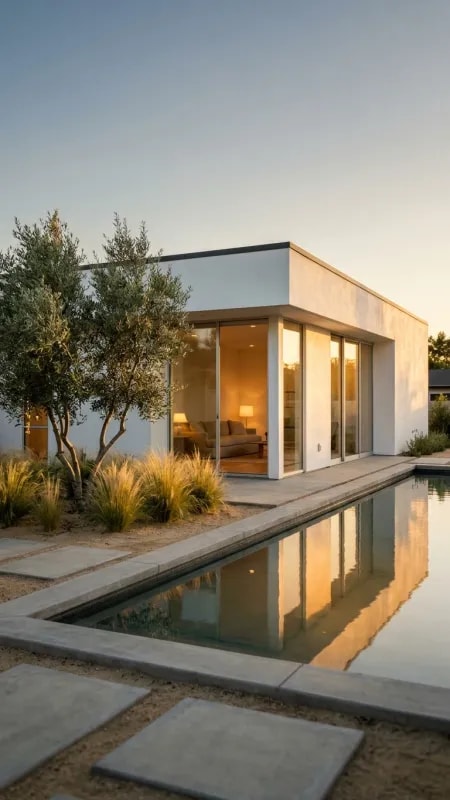
The pool is the quiet hero. Set on axis with the entry and edged in stone pavers, it works as a reflecting plane rather than a swimming feature first. That alignment matters more than size: a narrow rectangle running straight to the door pulls the eye forward and makes a modest plot feel deep. If you are planning something similar, keep the water's interior finish dark, because dark surfaces mirror the facade instead of glowing turquoise, and hold the surrounding planting low so the reflection stays unbroken. Clumps of grasses and a few olive trees frame the edges without stealing the view. Restraint here reads as expense.
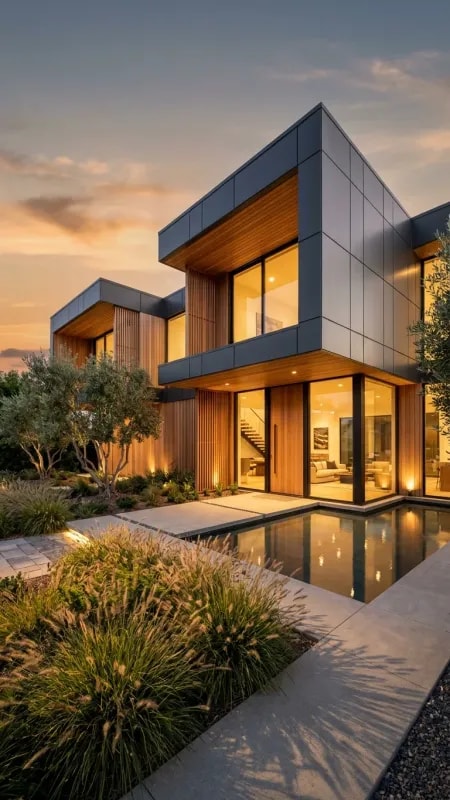
Wood slat screens do the softening. Against all that glass, honey-toned timber adds the one material the eye can touch, and the vertical rhythm breaks up the long horizontal roof. Slats also solve an everyday problem: they screen upper windows from neighbors while still letting evening light leak through in thin stripes. Glass balcony railings follow the same logic, disappearing so the facade reads as stacked planes rather than a railing-heavy box. Limiting the palette to three families, wood, stone, and glass, is what keeps a modern exterior from looking busy at night.
Then there is the lighting, which is where most exteriors fail. The trick is layers at different heights instead of a row of spots. Here, warm interior light does most of the work, spilling through the glass and bouncing off the pool. Outside, soft ambient washes pick out the wood and the steps, never the source. Keep interior bulbs around 2700K so the glow stays amber against the cool sky, and light the path, not the plants. The result is a house that looks occupied rather than illuminated, which is exactly the feeling that makes a passerby slow down and imagine an evening by the water.