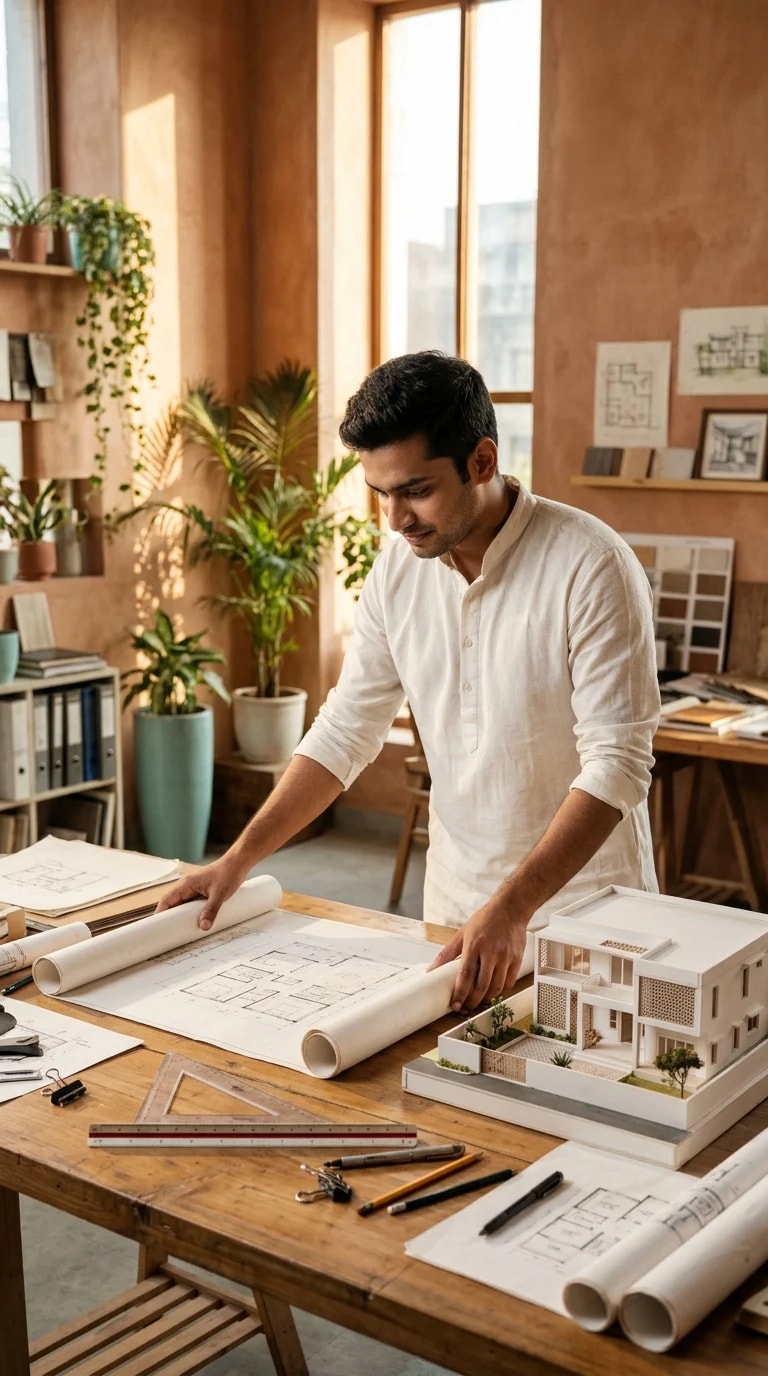
There is a particular kind of quiet that settles over a desk covered in blueprints. A pencil rolls to a stop against a rolled-up site plan, a cardboard model of a pitched-roof house sits within arm's reach, and the light through the window turns everything the color of weak tea. Anyone who has ever spent a Sunday sketching room layouts knows the feeling: the plan is not the building yet, but it is already the dream. That is the ritual a good home design game app tries to bottle.
The pleasure of that desk is tactile. You move a wall on paper and the whole room shifts with it. You cut a staircase from foam board and suddenly understand the scale of the thing in a way no photograph could teach you. Physical models are unforgiving in the best way, because they force you to commit. Digital design tools borrow that honesty and remove the mess. Drag a partition two feet to the left and the square footage updates, the sofa repositions, the light angles change. The friction that once lived in an eraser now lives in a tap.
What these apps do best is let you test the ideas you would never dare build. An all-terracotta kitchen. A sunroom that gives up half its floor to plants. A staircase with no railing, just because you want to see what it does to the ceiling height. In a game-like interface, nothing costs anything until you decide it does. You can furnish a narrow Victorian hallway a hundred ways before breakfast, then walk through the result at eye level and notice the one thing that never worked on paper: the doorway is too close to the coat hooks.
For all the convenience of rendering, the apps that people return to still respect the pencil stage. The best ones begin with a blank grid and a few honest constraints, not a catalogue of showroom perfection. They let you sketch a rough footprint first, adjust it until the proportions feel right, and only then start layering finishes. Working in that order keeps the design about how you live rather than what you can buy, which is the difference between a home and a showroom.
So keep the blueprint on the wall. Keep the little cardboard house on the shelf, even after the digital plan has replaced it. The model reminds you that a home is a thing you build with your hands and your patience, one decision at a time. The app just makes it possible to make a thousand of those decisions in an afternoon, and to enjoy every one of them.