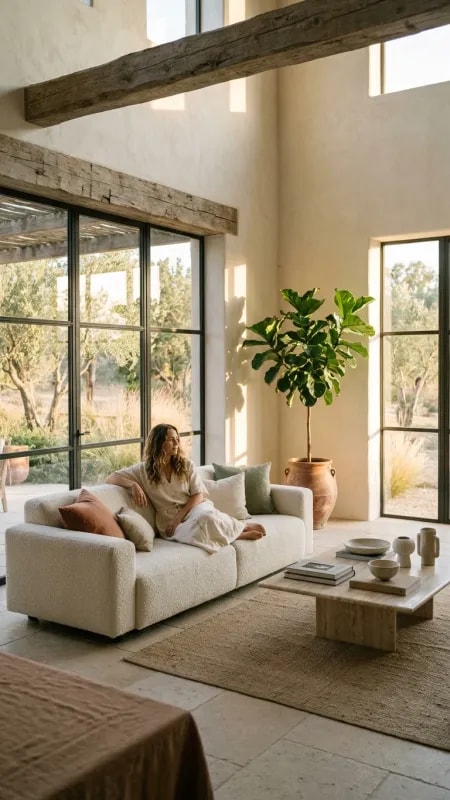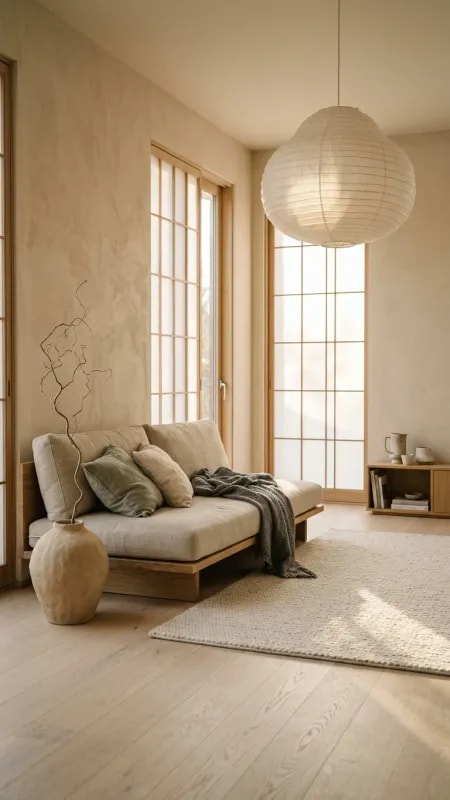
There is a particular quality of light that arrives about an hour before sunset, when the air turns to amber and everything it touches seems to glow from the inside out. Standing in a field of ripe wheat, that light wraps around you, softening edges and turning ordinary strands of grass into something luminous. It is the feeling most of us are chasing when we say we want a room to feel warm, and it is entirely possible to design for it. The trick is not to decorate a living room to look like a field, but to borrow the field's grammar: diffuse light, layered texture, and a palette pulled straight from the harvest.
Start with color and let it stay low and earthy. Think of the shades you would find walking that field at dusk: toasted cream, honey, pale straw, soft ochre, and the muted olive of distant trees. These tones work because they sit close to one another in value, creating the same hazy continuity the camera captured in that blurred background. Paint walls in a warm limewash or chalky plaster finish rather than flat emulsion, so the surface holds a little movement and shifts through the day. Introduce honey-toned oak or ash in furniture and floors, and keep metals warm and brushed rather than bright. A single deeper note, like rust or walnut, gives the eye somewhere to land without breaking the serenity.
Then treat light as material. The halo around the subject in that portrait comes from backlighting, and you can recreate the effect indoors by washing light across a wall instead of pointing it at people. Swap recessed downlights for floor lamps, wall sconces, and table lamps fitted with warm bulbs in the 2700K range, all on dimmers. Hang linen or cotton voile sheers at the windows so daylight arrives softened, scattering across the ceiling and pooling on the floor. In the evening, a pair of lamps at different heights creates the same gentle gradient, a bright core that fades outward into shadow.
Texture does the rest. A wheat field is dense and tactile, thousands of slender stems catching air, and a room that feels that alive rarely relies on a single fabric. Layer a slubby linen sofa with a bouclé chair, a chunky wool rug, and a raw-edged wooden table that shows its grain and knots. Keep the sheen low and the weave visible. Add movement where you can: an armful of dried grasses in a tall ceramic vessel, a linen curtain that stirs when a door opens, a woven shade that throws a soft grid of shadows at midday. These small gestures replace the breeze the field supplies for free.
The last ingredient is restraint. Fields feel expansive because they are mostly one thing, repeated. Let your living room breathe the same way, with generous negative space, fewer objects, and a clear path to the windows. Resist filling every surface. The warmth you remember from that golden afternoon is not really about how much is in the frame; it is about how gently everything in it agrees with the light.