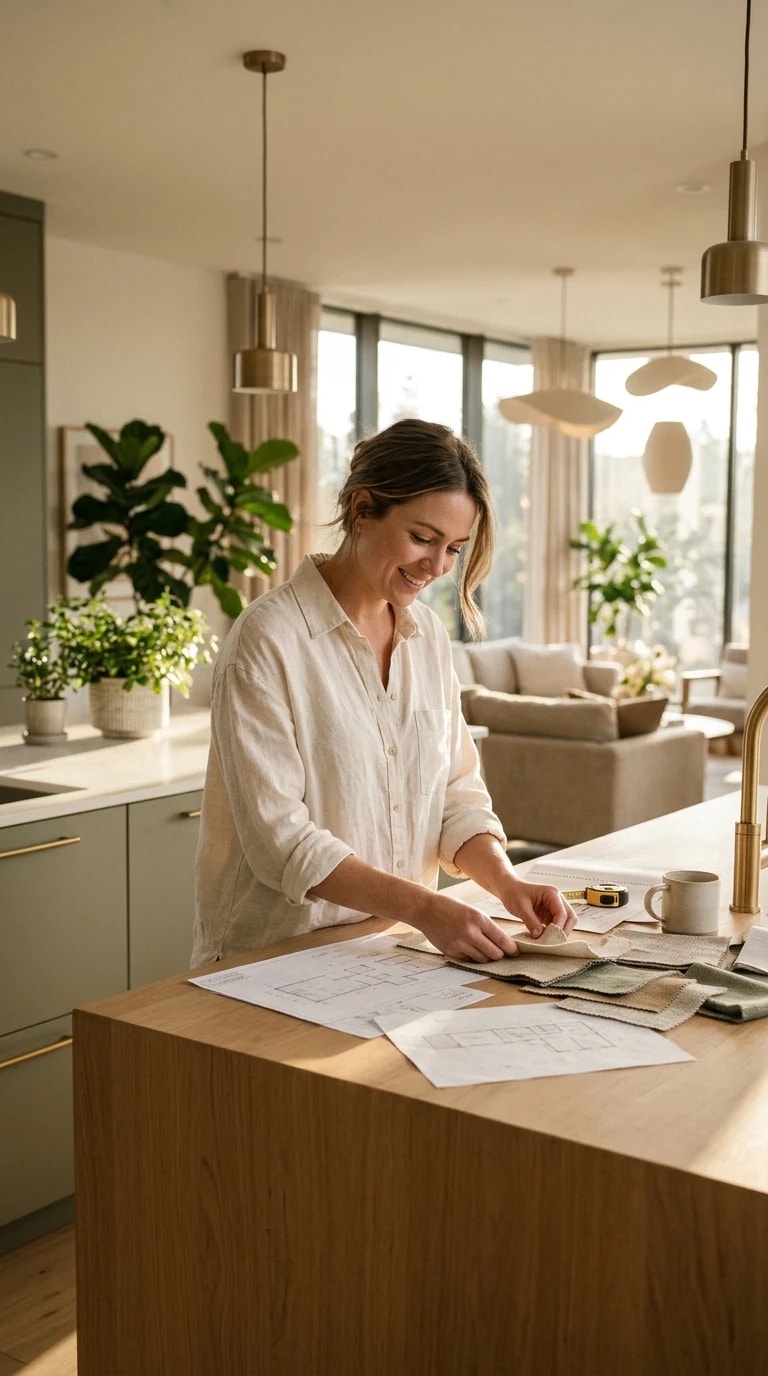
The most productive room in a renovation is rarely the one being torn apart. It is the kitchen island on a slow morning, when the floor plans are unrolled and weighted down at the corners, fabric swatches are fanned across the counter like a hand of cards, and a mug has been pushed to a safe distance from anything that stains. In this sunlit open plan, pale green cabinetry and a brass faucet wait patiently behind the work surface while the real decisions are still being made on top of it. The scene is a reminder that a home design graphic starts as something physical: paper, tape, and a tape measure that keeps wandering off.
Treat the island as a horizontal drafting table and the process gets easier. Start with the plans as the bottom layer so every sample sits in the exact spot it will occupy in the room, then work outward from the largest surfaces to the smallest. Countertop first, then cabinet fronts, then hardware, then textiles. Placing a square of olive linen beside the sink tells you more about a backsplash than any screen ever will, because your eye reads the two together in the same light, at the same angle, at the same moment you would actually be standing there.
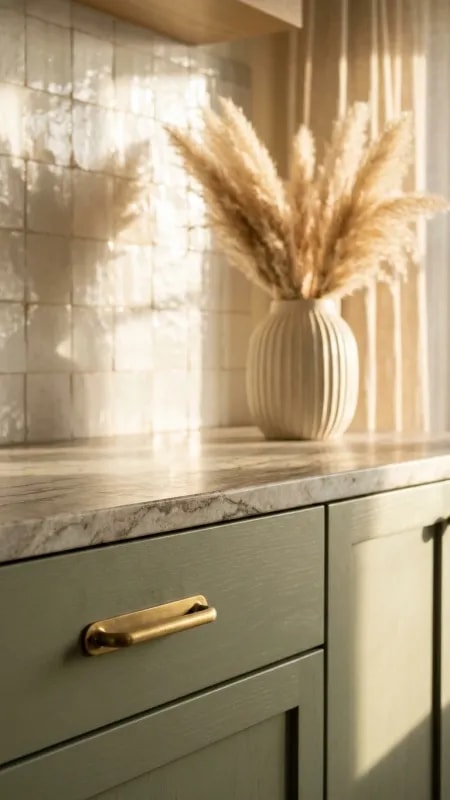
The palette in this room is a study in restraint: cream walls, white oak, sage and muted olive cabinetry, beige linen, and a single line of warm brass running from the faucet to the pendant fittings. That narrow range is what makes the space feel calm rather than flat. If you are building your own version, limit yourself to three dominant tones and one metallic, then repeat each of them at least twice across the room. Repetition is what turns a collection of nice objects into a coherent design.
Daylight deserves a sample of its own. Tall windows flood this kitchen from one side, which means every finish will shift between eight in the morning and four in the afternoon. Sage can read gray at dawn and almost yellow by noon. Take your swatches to the window, then to the darkest corner, then back to the island, and eliminate anything that only looks right in one of those places. The golden glow in the room is not a filter; it is a finish you are choosing whether or not you notice it.
Keep the island's working layer small and honest. A tape measure, a mug, a notebook, and no more than a dozen samples at a time. When the pile grows, the clarity disappears. The joy of this stage is that nothing is permanent yet. Every arrangement on that counter is a version of home you can pick up, hold against the light, and try again.