There is a particular kind of room that makes you exhale before you have even set down your bag. It smells faintly of woodsmoke and dried herbs, the floor is a patchwork of worn rugs, and the walls seem to lean in rather than stand at attention. Nothing in it is new, and nothing in it is trying to be. That is the quiet argument these cottage interiors make against the polished, screen-lit modern home: some spaces work better when they feel older than the people living in them.
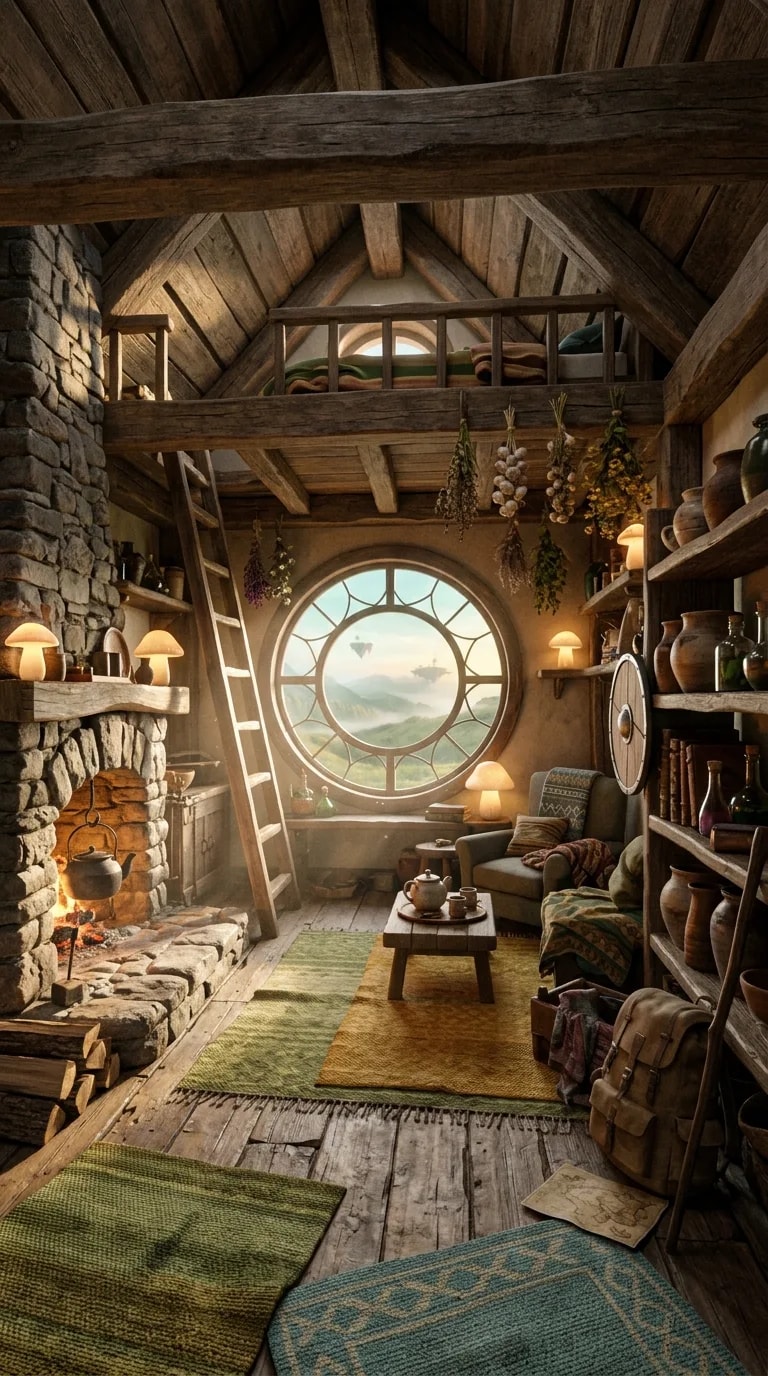
The architecture does most of the persuading. Heavy beams cross the ceiling, a rough stone hearth anchors one wall with a kettle hanging over the fire, and a wooden ladder climbs to a sleeping loft that was clearly built by hand and by eye rather than by laser level. The room's centerpiece is a large round window, cropped top and bottom so it reads more like a porthole than a picture window, pulling cool daylight into a space that is otherwise bathed in honey and amber. Gray stone, olive greens, and a single teal rug keep the warmth from tipping into sweetness. Everything is slightly irregular, and that irregularity is the point.
What makes the look livable rather than theatrical is the layering of real things. Shelves crowd with pottery and books instead of curated ceramics. A backpack slumps by the door next to a map, a low table holds a tea service that looks used this morning, and bundles of herbs hang where they were put to dry. These are the details that photographs of modern interiors often edit out, and they are exactly what makes a room feel inhabited. If you want to borrow the effect, start with texture before color: raw wood, unpolished stone, linen, wool, and a few pieces of metal with visible wear.
Lighting finishes the job. In this room, firelight and small lamps glow low while daylight spills in cold from the round window, and the contrast is what gives the space its sheltered, quietly escapist mood. Recessed lighting and a single overhead fixture would flatten it instantly. Instead, think in pools of light at different heights — a lamp on a shelf, a candle on the table, the fire itself — so the eye travels and the corners stay soft. Add a chair deep enough to curl into and you have a room that invites you to stay rather than to admire.
The lesson is not to reject modern comfort but to stop letting it set the tone. Insulation, plumbing, and a good mattress can hide behind board and stone. What shows is the character: a hand-cut beam, a slightly crooked shelf, a hearth that has clearly warmed more than one generation of tea. Build for that, and the house will feel less like a showroom and more like somewhere you have always belonged.