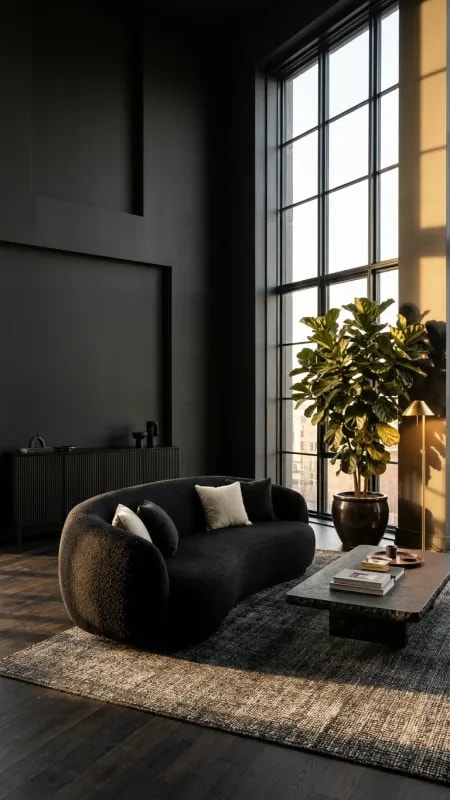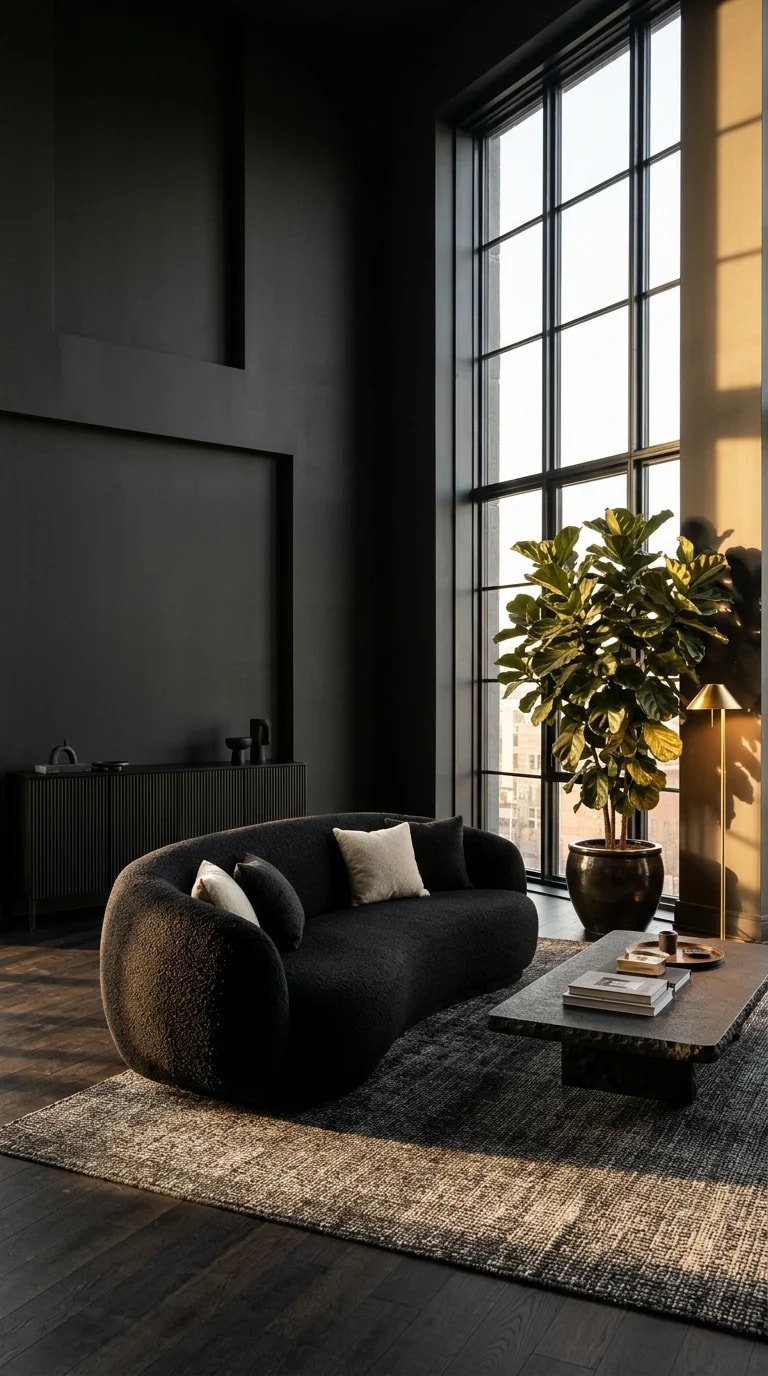
There is a particular kind of calm that only shows up in a dark room hit by one strong beam of light. This living room lives there. Charcoal walls, near-black flooring, and a high ceiling set the stage, then late golden sun rakes through a floor-to-ceiling gridded window and draws sharp geometric shapes across the rug, the stone tabletop, and the curve of the sofa. Nothing is evenly lit. That is exactly the point.
The sofa is the anchor, and it earns the role by refusing to look like furniture. A low, rounded black bouclé piece sits left of center, its nubby texture catching the light while the color absorbs it. Curves matter here: in a room built from vertical paneling, tall window mullions, and a long ribbed sideboard, one soft sculptural shape keeps the geometry from turning cold. The low seat height also lets the ceiling feel taller and lets the light travel above the furniture instead of being blocked by it.
Texture does the heavy lifting where color stays quiet. A large greige rug, mottled rather than flat, softens the dark wood floor and gives the coffee table a lighter plane to sit against. That table — a low slab of pale stone over warm wood legs — holds a stack of oversized books and a small tray, nothing more. Behind it, a minimal ribbed sideboard repeats the vertical rhythm of the wall paneling, so the eye reads one continuous pattern instead of a cluttered back wall. In a moody palette, restraint is what keeps the room feeling luxurious rather than heavy.
The window and the plant balance the composition. A tall fiddle-leaf fig in a dark pot stands where the light is brightest, its broad leaves throwing soft, irregular shadows that contrast with the crisp lines of the mullions. Deep green against charcoal and amber is one of the most forgiving combinations in a low-light room: it adds life without demanding attention. Cream ceramics, a warm taupe throw, and brass-toned accents finish a palette that stays inside five notes.
If you want to borrow the effect, start with the light rather than the furniture. Notice where sun lands at three in the afternoon, then place your lowest, darkest, most sculptural piece just behind that path. Keep one large plant near the glass, layer two or three coarse textures against smooth stone, and let the shadows do the decorating.