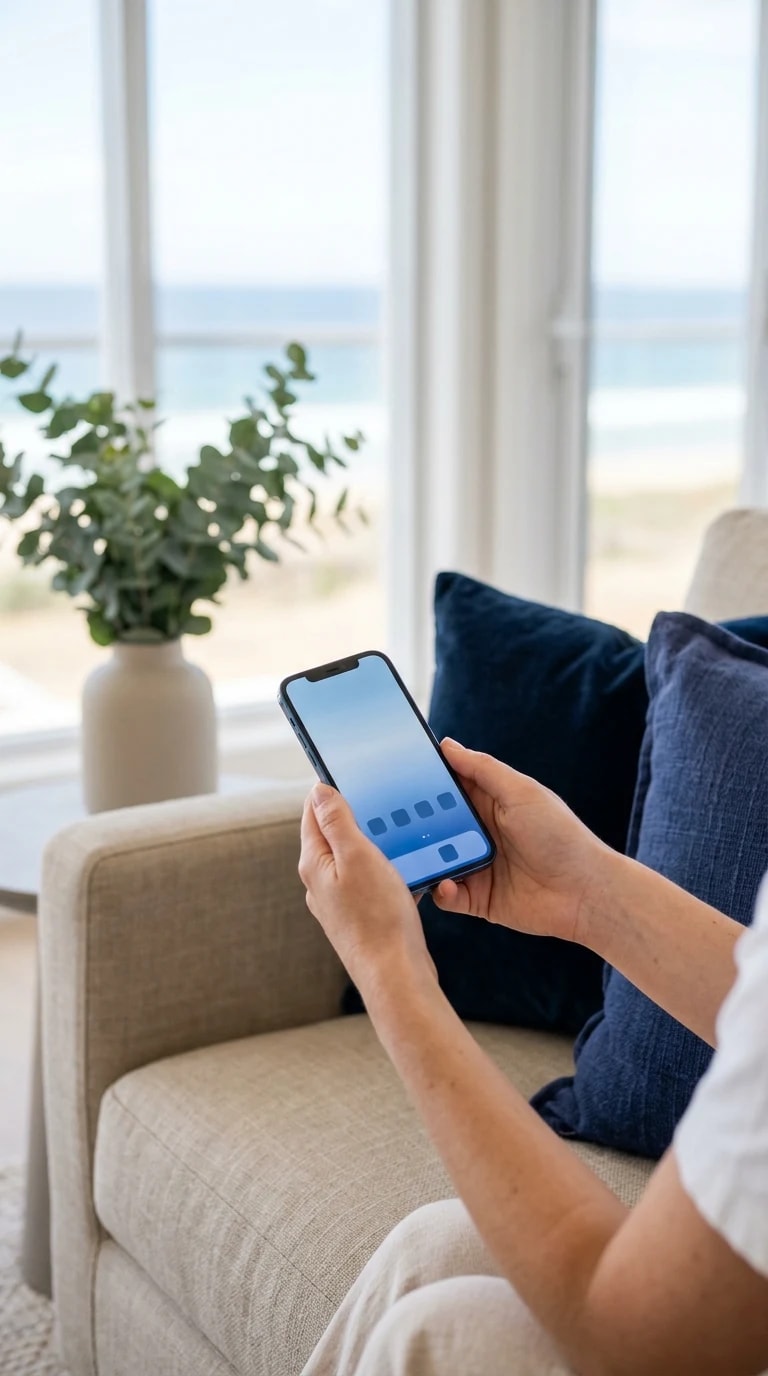
The first thing you notice in this corner is not the furniture. It is the light. Diffused daylight spills through a wide window, softens the ocean into a pale blue blur, and lands on a beige sofa with a weave you can almost feel through the screen. A pair of hands rests a phone against a navy cushion; a white ceramic vase holds a single leafy branch. Nothing in the frame is expensive-looking in an obvious way, and that is precisely the point. This is a room that has been edited rather than decorated, and the editing is the whole idea.
Korean home design leans hard on the concept of yeobaek, the beauty of what is left empty. Where Western living rooms often fill every surface, this approach treats bare wall, bare floor, and bare cushion as active ingredients. The result is a corner that can breathe — and the breaths are what make it feel restful. If you want to copy it, start by subtracting. Clear the side table completely, then put back one object. Take two cushions off the sofa and see whether the third one looks better alone. The empty space is not a placeholder waiting for a purchase; it is the finish.
The palette here is a tight three-part harmony: creamy neutrals, deep navy, and a single fresh green. Navy is doing quiet structural work, anchoring a scene that would otherwise drift into beige mush, while the eucalyptus adds the only saturated note in the frame. Try the same ratio at home — roughly eighty percent warm neutral, fifteen percent dark accent, five percent living color — and resist the urge to add a fourth. A matte white ceramic vase matters more than it seems, because it gives the eye somewhere clean to rest between the softer textures.
Texture is where the softness actually lives. The sofa reads as a slubby linen or bouclé in a warm oatmeal rather than a cool grey, and the navy pillows look like cotton or washed velvet with a little weight to them, the kind that hold a dent when you lean back. The branch is loose and asymmetrical, not a tight florist arrangement, which keeps the whole vignette from feeling staged. Line up three vases and it becomes a catalogue page; leave one, slightly off-center, and it becomes a home.
Finally, notice the practical layer hiding in plain sight: the phone, the hidden cables, the low console just out of frame. Korean interiors handle technology by absorbing it — outlets tucked into furniture, chargers routed behind panels, screens kept off the sightline to the window. The ocean view is framed, not blocked, and the seating faces it. That single decision, orienting the sofa toward the light instead of the television, does more for the calm of this room than any object in it.