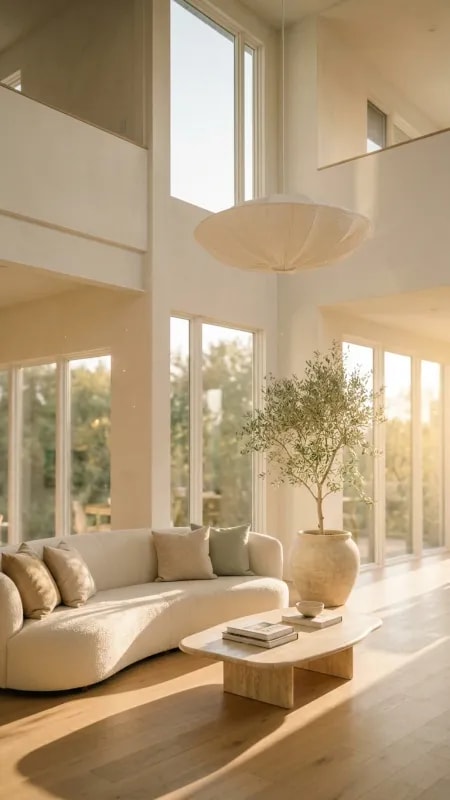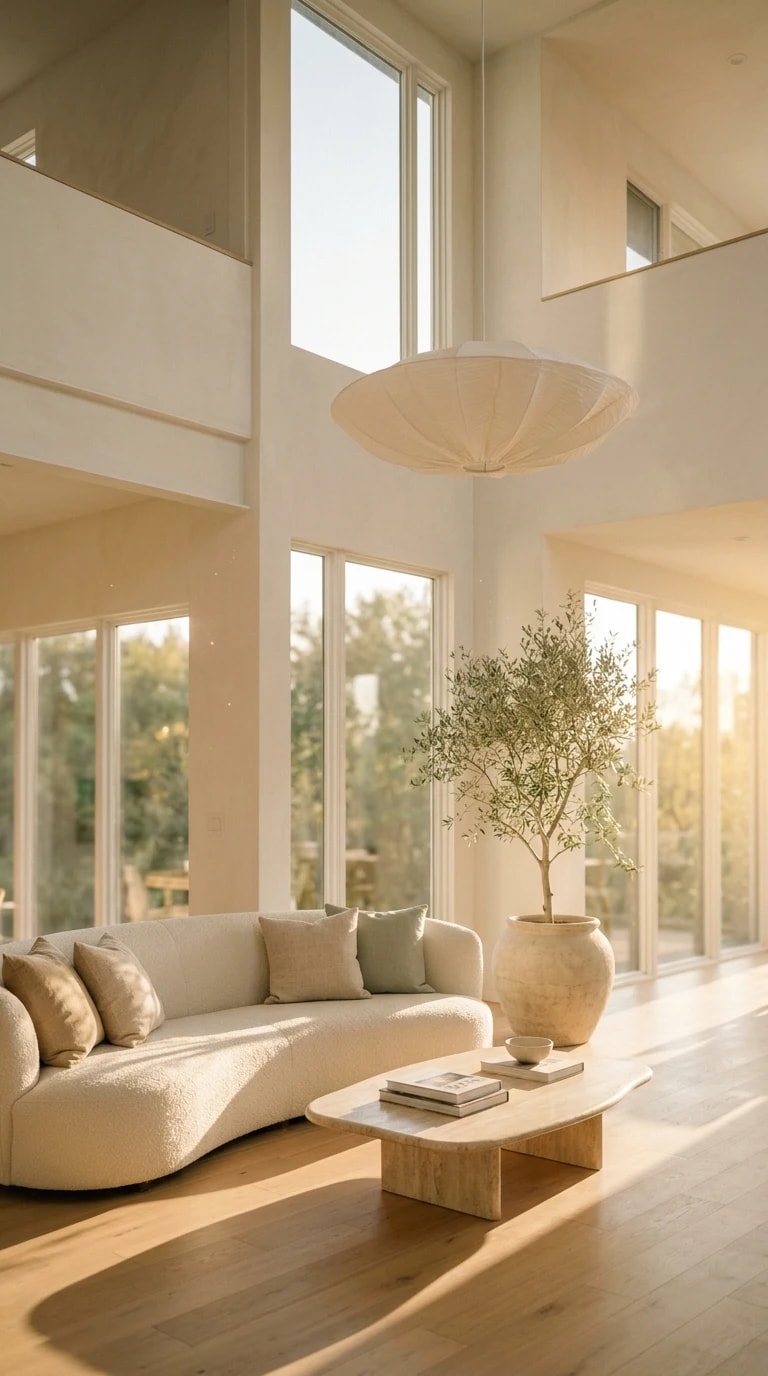
The first thing this room does is refuse to feel like a box. Two storeys of glass on the far wall, a mezzanine gallery above, and pale oak boards running uninterrupted toward the doors — the height is what makes the garden readable from the sofa. Sunlight arrives low and warm across the floor, stretching the shadows long, and the leafy view fills the upper half of the frame the way a painting would if you had the nerve to hang something that big. Most rooms ask you to look down at a coffee table. This one keeps lifting your eye.
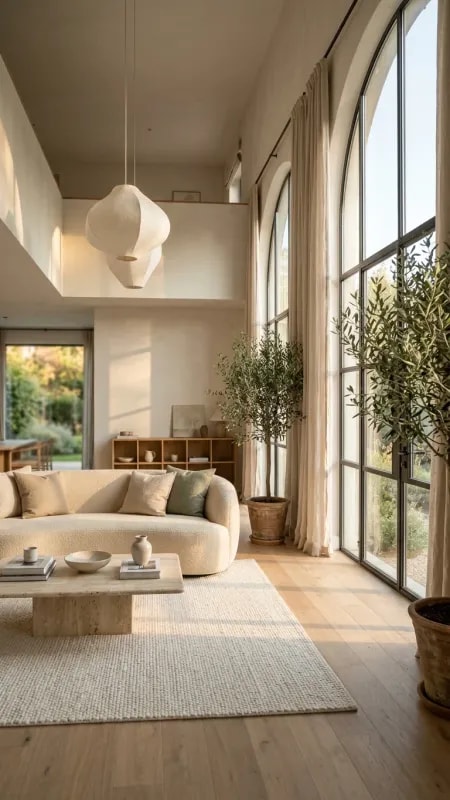
Height like this only works when something is tall enough to answer it. That is the job of the olive tree. Its slim trunk rises from a rounded, earthy planter and stops somewhere near the height of the mezzanine rail, giving the double-height void a vertical line to hold onto. Without it, the room would be an impressive emptiness. With it, the space feels measured and inhabited. Choose a species that tolerates bright, indirect light and a little neglect — olive, ficus, a tall citrus — and give it a pot with real weight so it reads as architecture rather than decoration.
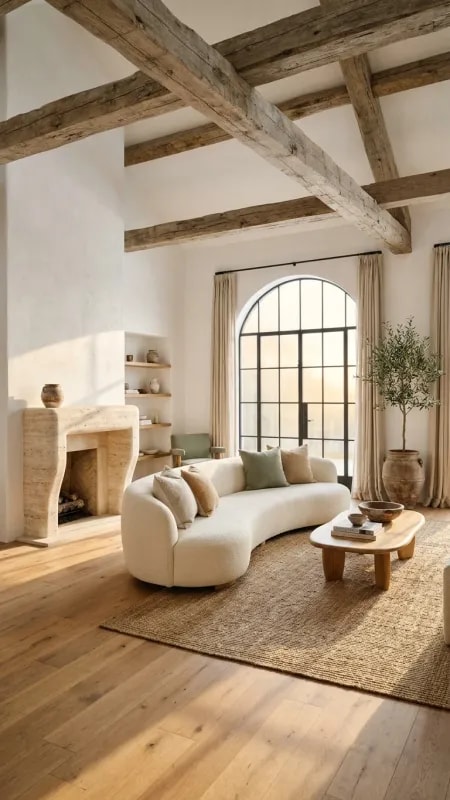
The larger pleated pendant hangs on the same axis, dropped low enough to feel intimate but high enough to clear sightlines to the garden. In rooms of this scale, light fixtures and trees become the furniture; the sofa, long and curved in cream with beige and sage cushions, is deliberately low so nothing competes. A single organic table, a stack of books, a small bowl — that is enough. Restraint is what keeps a big volume calm instead of echoey.
Where the glass meets the floor matters more than the glass itself. Frameless doors, a flush threshold and the same oak continuing onto the terrace make the outside feel like the next room rather than a view. If you are planning a similar build, deal with heat gain and acoustics early: low-e glazing, deep eaves or an external blind for summer afternoons, and soft surfaces — a wool rug, heavy curtains, an upholstered sofa — to stop sound bouncing off all that glass and hard flooring.
Then leave gaps. The calm in this room comes from what is not there: no clutter against the windows, no heavy drapes blocking the green, no furniture parked in the path of the light. Position the sofa a little off the glass, let the tree take the corner, and let the afternoon do the rest.