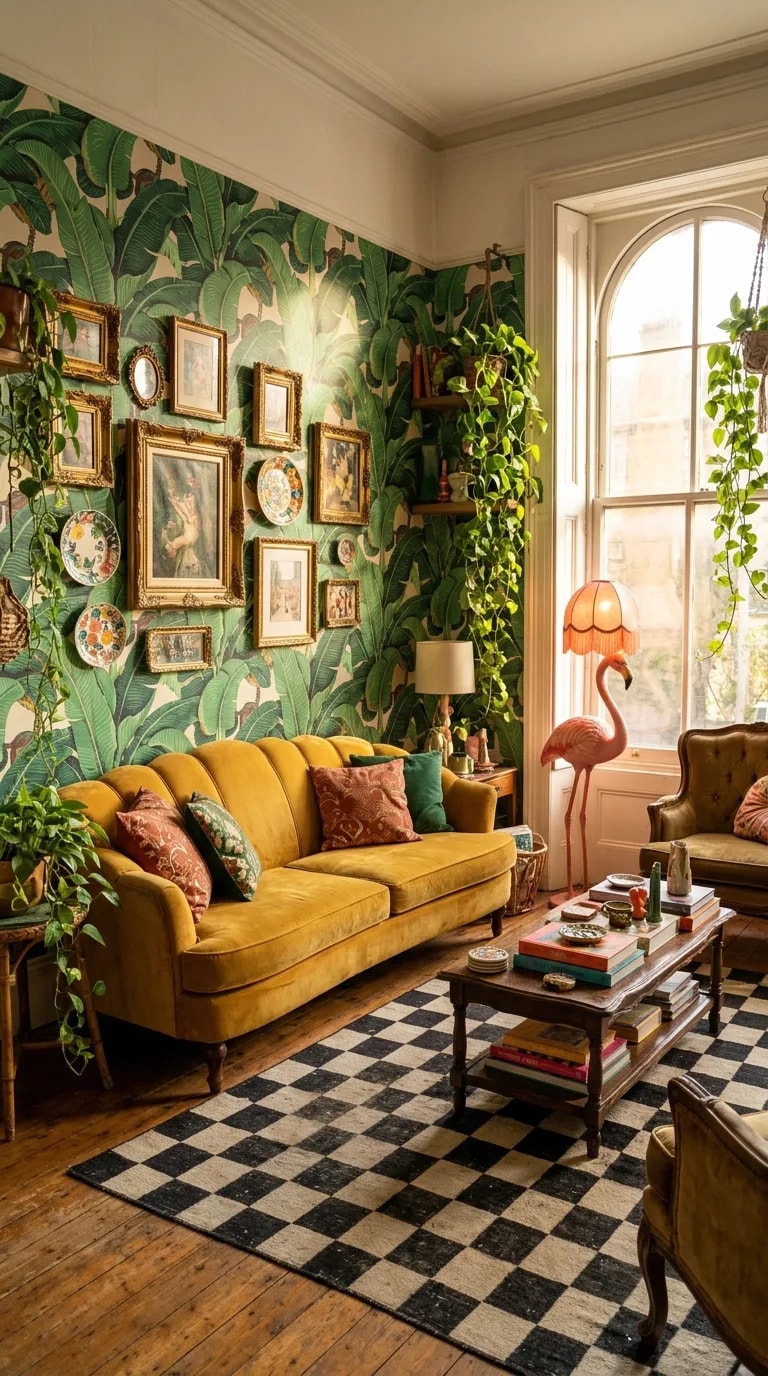
Most single-floor plans arrive with the same promise: wide sightlines, low furniture, nothing to interrupt the view from the kitchen to the back door. That advice works beautifully until it doesn't, and you find yourself in a living room that feels like a waiting area. This corner takes the opposite route. A mustard velvet sofa sits low against banana-leaf wallpaper in saturated green, and instead of shrinking the space, the color gives the eye somewhere to land. Pattern does the job that walls usually do in a two-story house: it creates a boundary, so the room reads as a room rather than a corridor that happens to have seating in it.
The layering is deliberate even though it looks collected. Green leaves in the paper echo the trailing ivy and pick up the olive armchair tucked at the edge of the frame. Gold frames and decorative plates climb the wall in a loose gallery, mixing sizes so the arrangement feels grown rather than bought in one trip. A checkerboard rug in black and cream grounds all that warmth and keeps the mustard from floating. On the coffee table, books and small objects stack in a way that invites a hand to move them, which is the quiet test of a good maximalist room: everything should look touchable, not preserved.
Light is what keeps this from tipping into heaviness. The arched window on the right brings in warm daylight through sheer curtains, softening the east-facing shadow that collects along the sofa. A small lamp glows near the cushion pile, and the pink flamingo floor lamp adds a note of pure playfulness without asking to be taken seriously. In a one-level home, where rooms often share borrowed light, treating the window as a design element rather than a hole in the wall matters. Sheers diffuse without dimming, and the arch gives the corner a finished, almost theatrical edge.
Scale is the practical lesson. The sofa is long and low, the armchair is slim, and the rug is large enough to hold the whole conversation group, so the floor plan stays readable despite the density. Nothing blocks the path to the window. If you want this look in a single-floor layout, start with one dominant pattern, choose a hero color from it, and let two supporting tones repeat at least three times each across textiles, art, and ceramics. Cap the palette at five or six hues and the room stays layered instead of loud.
What makes this corner memorable isn't the wallpaper, however good it is. It's the sense that someone has been living here long enough to accumulate things worth keeping. Single-floor homes can carry that same warmth when the design stops apologizing for color and lets a room be a room.