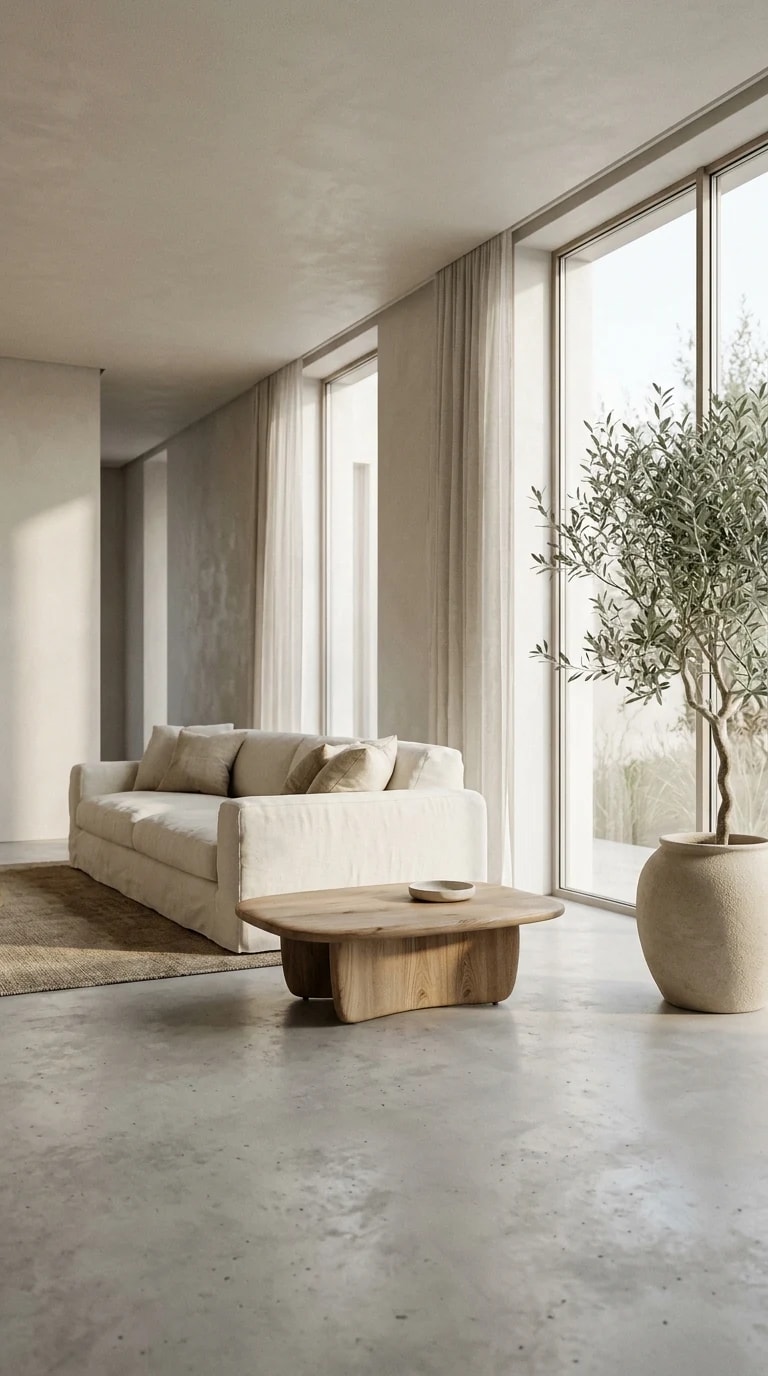
Look at what this room leaves out. A white fabric sofa sits low against the wall, a slim wooden coffee table floats in front of it, and a single olive tree rises from a sculptural ceramic pot near the window. Everything else is air. The floor — polished concrete, cool and continuous — runs uninterrupted from the seating area to the sheer curtains, and that unbroken surface is doing more for the sense of space than any mirror or paint trick ever could.
The most common mistake in a small living room is filling the perimeter. When furniture hugs every wall, the eye has nowhere to travel and the room reads as a corridor of objects. Instead, treat empty floor as a material you are deliberately installing. Pull the sofa a few inches off the wall if the layout allows, keep the coffee table narrow enough that you can walk around it, and resist the urge to tuck a side table into every gap. A room needs roughly a third of its floor visible to feel generous, and this one clears that bar easily.
Height matters just as much as width. The curtains here hang close to the ceiling and pool slightly at the floor, which stretches the wall visually and hides the fact that the window is narrower than it appears. Repeating that move costs almost nothing: mount the rod high, buy panels long enough to graze the floor, and choose a sheer fabric that filters daylight rather than blocking it. Then add one tall, vertical element — a sculptural pot with an olive tree, a slim floor lamp, a stack of oversized art — to pull the gaze upward and break the horizontal line of the sofa.
Color and texture keep the restraint from reading as cold. Creamy whites, warm beige, pale wood, and a single muted green sit within a narrow range, so nothing chops the space into competing zones. The textured rug softens the concrete underfoot and quietly defines the seating area without walls or dividers. One plant, one pot, one rug: each object earns its place by adding either softness or height, never both clutter and color at once.
If you want to borrow the effect, start by subtracting. Clear the floor, lift the curtains, lower the furniture profile, and choose a single statement piece over five small ones. What remains will feel less like a small room you are managing and more like a calm, open space you get to live in.