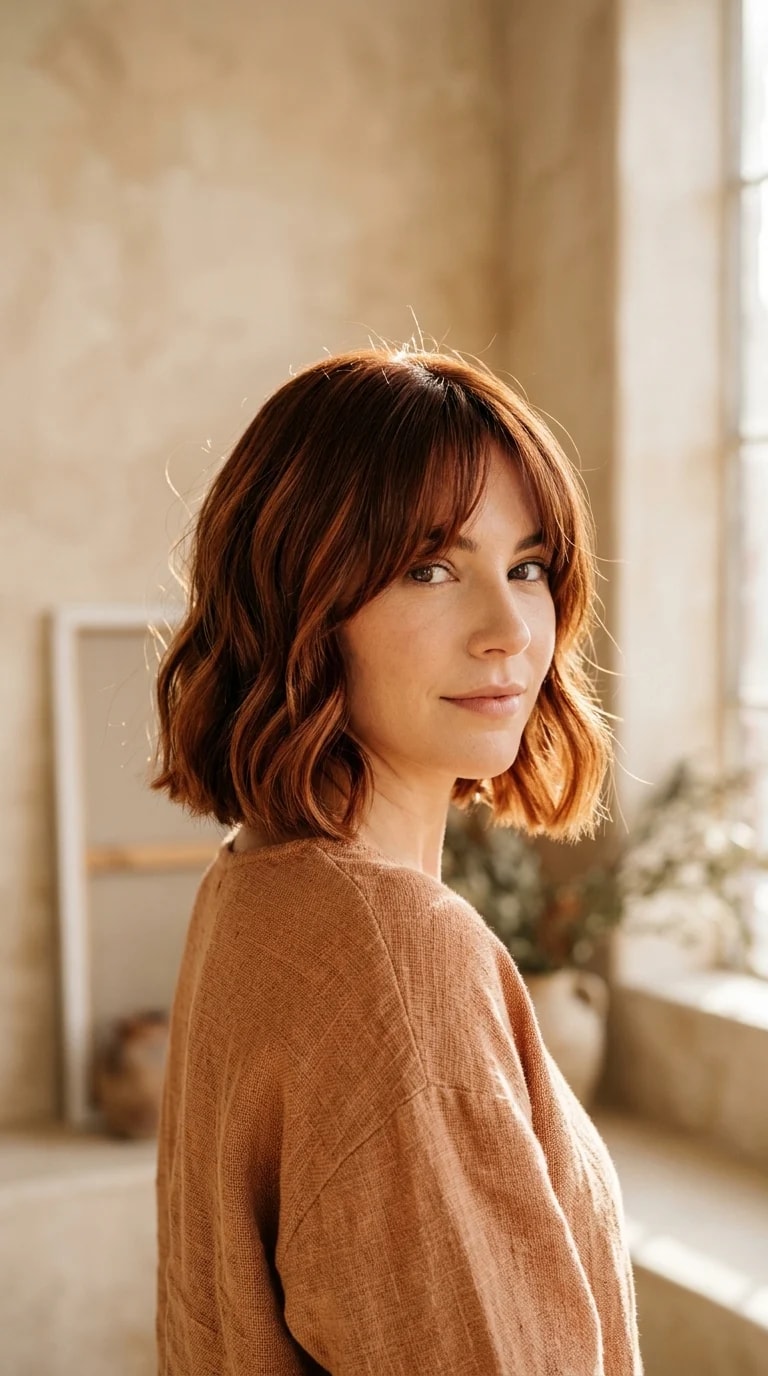
Most home design videos lead with the room. The camera drifts past the sofa, the shelf, the rug, and the viewer admires it the way they admire a catalog page. Then they scroll. What keeps them watching is usually simpler: a person standing in that room, lit by the same window, looking like they actually live there. A medium close-up of someone glancing over their shoulder does more for a terracotta-and-cream palette than a slow pan ever will, because it gives the eye a subject and gives the room a scale, a mood, and a reason.
The light in a shot like this comes from one place, and it comes from the side. A bright window on the right wraps the edge of the hair, lifts the texture of a chunky knit, and leaves the far side of the face in soft shadow. Resist the urge to fill that shadow with a panel or a phone flashlight; the gentleness is the point. Position your subject a few feet off the window wall, turn their shoulder toward the glass, and let the plaster behind them fall away into dimness. Warm, low-angle afternoon sun is ideal, and it costs nothing to wait for it.
Depth of field is the second decision, and it should be deliberate. Open the aperture wide, get close, and keep the eyes tack sharp while the leaning mirror, the window frame, and the greenery outside dissolve into cream. That blur is not a trick to hide clutter, though it helps; it tells the viewer where to look. Frame so the background still reads as a room, enough plaster wall and a sliver of mirror to establish place, then let the rest go soft. If you shoot on a phone, use portrait video mode carefully and check the edges of the hair before you commit to a take.
Wardrobe and set dressing should agree with the architecture rather than compete with it. Earth tones, oatmeal, rust, and worn denim sit comfortably against rustic plaster, old wood, and linen. Texture reads beautifully on camera; flat fabric does not. Add one quiet object in the background, a mirror, a ceramic vase, a chair rail, and leave it alone. Movement should be minimal too: a turn of the head, a hand adjusting a sleeve, a slow walk toward the light. Ten seconds of that, cut against a wide shot of the same corner, gives you an opening beat that feels lived-in rather than staged.
Finally, grade for warmth and keep it honest. Lift the shadows slightly, hold the highlights on the window, and nudge the white balance toward the sun. The goal is the feeling of a house at four in the afternoon, unhurried and full of light, where the design supports the life instead of posing for it.