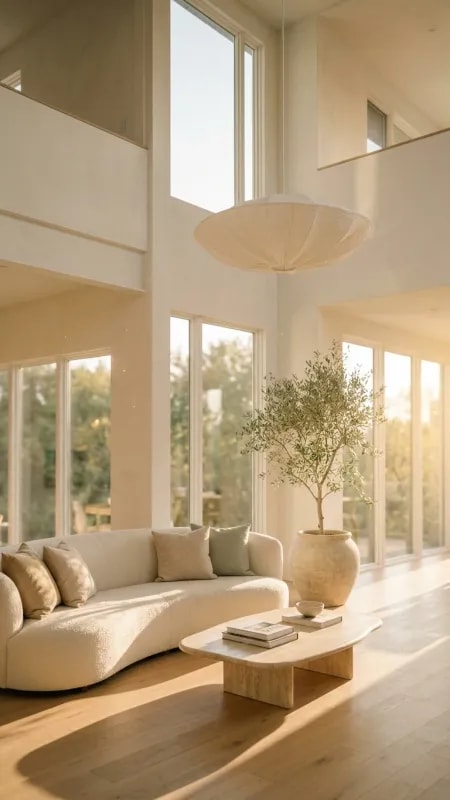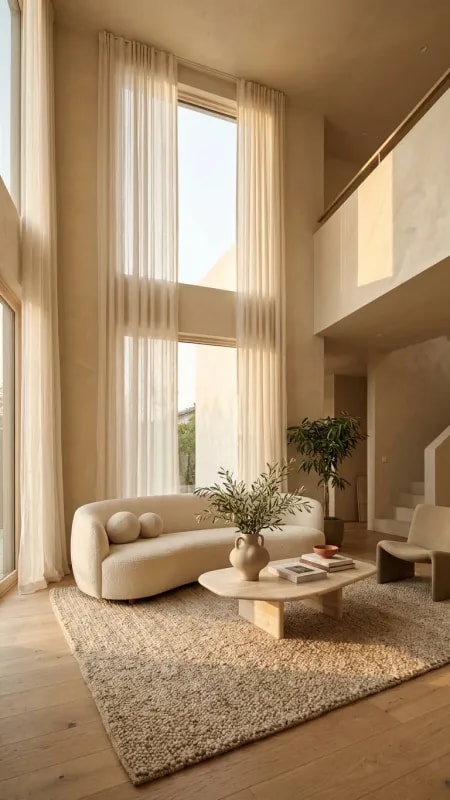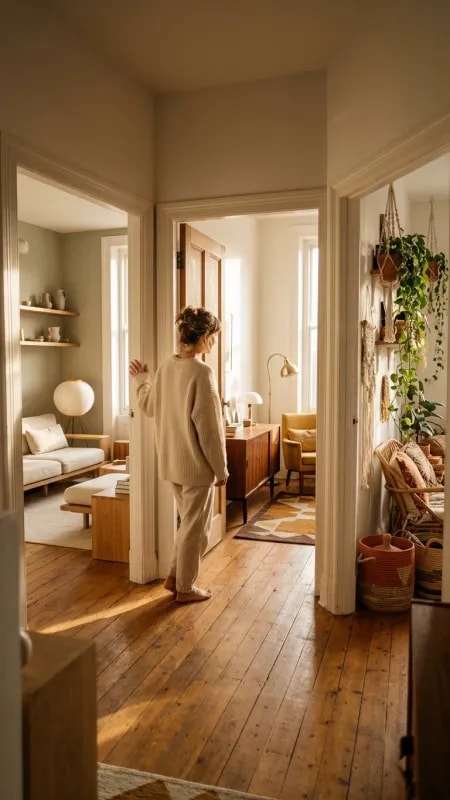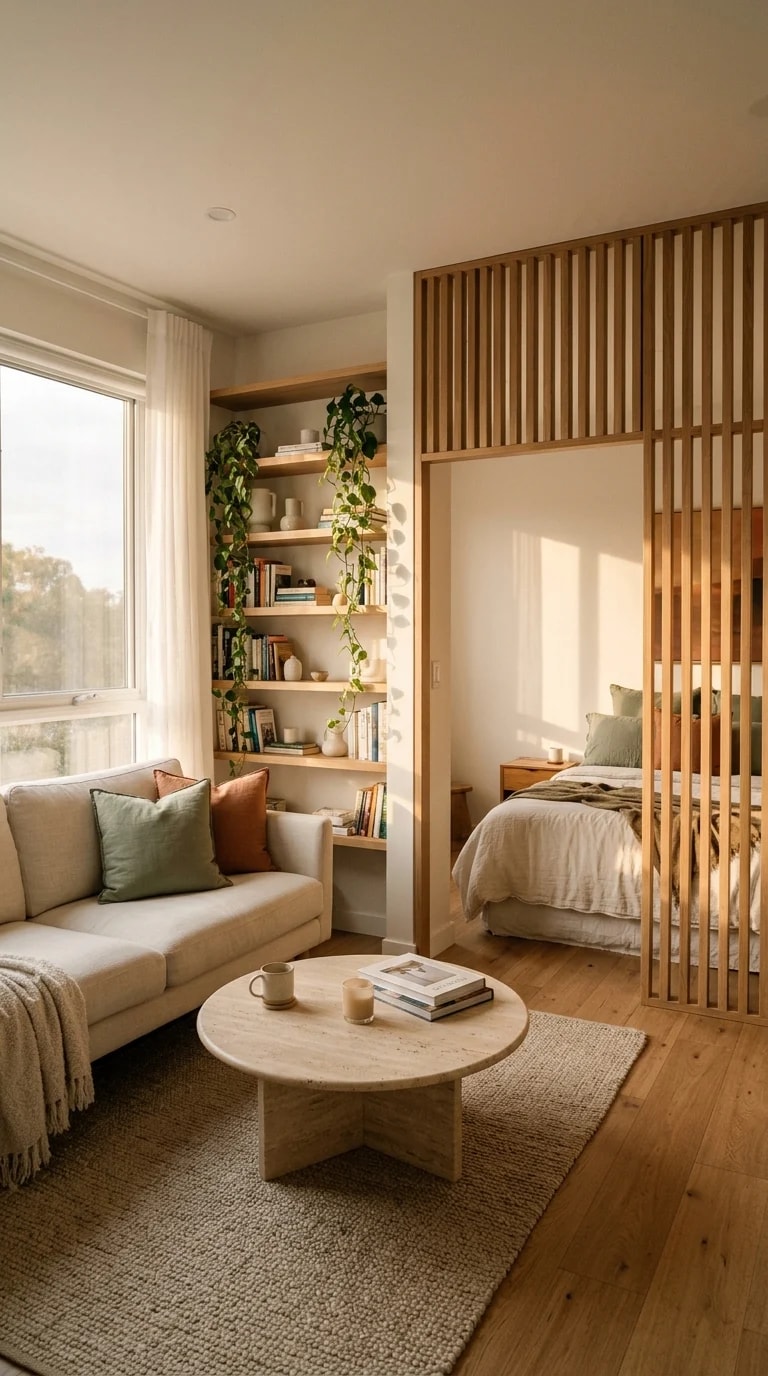
There is a particular quality of light that arrives low and honeyed in the late afternoon, and this open-plan living and sleeping space is built entirely around catching it. The window at the left of the room does most of the work, but the real trick is what happens after the light lands: it rakes across a cream sofa, warms the sage and rust cushions, and settles into the weave of the rug before sliding along a vertical wood-slat partition toward the bed. That partition is the quiet hero of the room. It divides without closing, screening the sleeping area while letting light, air and glimpses of white linen pass straight through.
Good home design outside the ordinary rarely comes from a single dramatic gesture. More often it comes from a series of small decisions that all point the same direction. Here the palette does it: oatmeal, cream, natural timber and a low note of green that echoes the planting trailing off the built-in shelves. Nothing in the room competes with the view. The travertine coffee table is round and matte and sits low enough that a mug, a couple of candles and a stack of books feel like the whole story. Even the fringe on the throw adds a soft edge where the eye might otherwise meet a hard line.
The slatted divider deserves a second look, because it solves a problem almost every open-plan home faces. A wall would have made the bedroom feel like a box inside a box. Glass would have been too crisp, too exposed. Timber slats, spaced a finger's width apart, give structure and privacy while keeping the outdoor connection intact. From the sofa you read them as texture. From the bed you see through them to the window, so the landscape is never fully out of sight. That is the whole idea of bringing the outdoors in — not knocking everything down, but leaving sightlines open enough that the sky stays on the guest list.
Built-in joinery along the back wall does similar work. Books, ceramics and trailing plants sit at eye level, so greenery is present even in the depths of the plan, well away from the window. It is a small, repeatable move: if you want a room to feel linked to the garden, put something living where the daylight cannot reach and let the planting continue the conversation.
The result is a space that feels calm without feeling staged, and airy without feeling empty. It suggests that the smartest exterior thinking often happens indoors — in slats, sightlines and surfaces that quietly hand the eye back to the landscape.