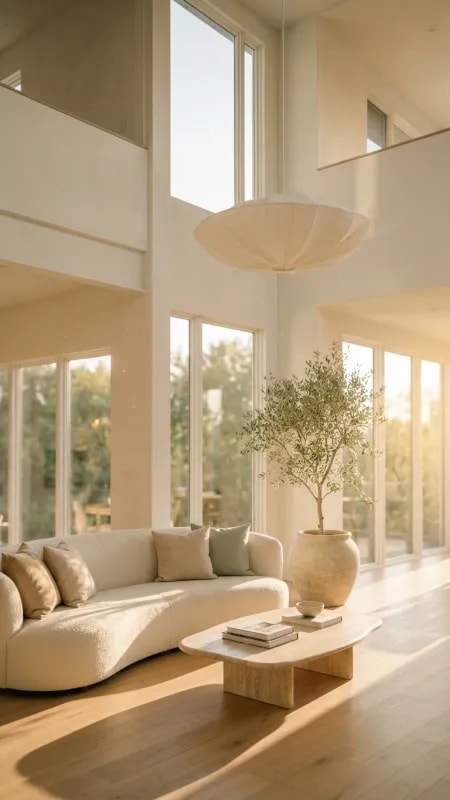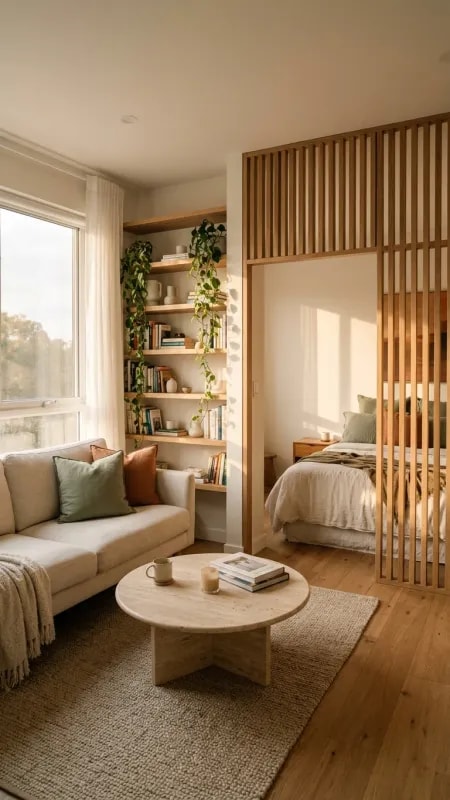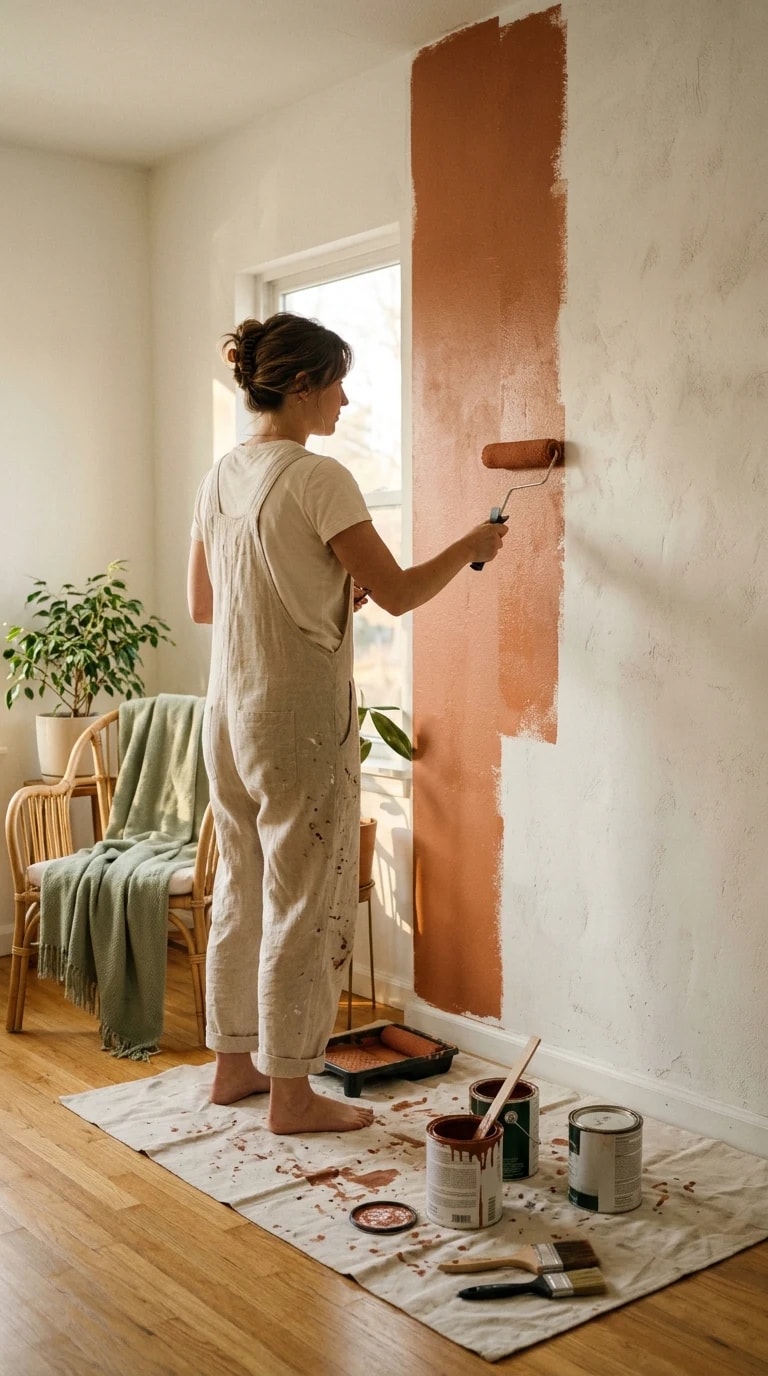
Most living rooms do not need a renovation. They need a decision. Look at the room in the photograph and you can almost feel the shift the moment the roller touches the plaster: soft white walls suddenly have something to talk to, and the honey-toned floor, the sage throw, the green leaves by the window all sharpen into a palette instead of a collection of objects. One wall, one weekend, one can of paint. That is the whole trick.
Choosing the terracotta is the part worth slowing down for. Clay reads differently depending on the light, so tape a few large swatches to the wall and live with them for a day. North-facing rooms pull color cooler and can take a richer, redder clay without turning heavy; sunny south-facing rooms can handle a softer, dusty rose-brown that glows in the afternoon. Sample pots on the actual wall, not chips held up at the paint counter, will tell you the truth. And resist the urge to paint the whole room. The reason a single accent wall works is contrast — the white on either side is what makes the clay look deliberate rather than accidental.
Once the wall is dry, the real styling begins, and it is mostly about restraint. In the image, the room works because nothing competes: a woven chair with a sage-green throw, one leafy plant, bare wood floors left bare. Terracotta is a strong, warm character, and it pairs best with the quiet company of cream, oatmeal, olive and natural fiber. Keep the largest furniture pieces neutral, then let one or two items echo the wall — a cushion, a ceramic vase, a frame in warm wood — so the color feels repeated rather than isolated. Skip anything that reads too glossy or too cool; brushed brass and matte clay sit comfortably together, chrome less so.
Practicalities matter as much as mood. Choose an eggshell or matte finish for living room walls so the surface softens the light rather than bouncing it, and plan on two coats over a tinted primer for an even, chalky finish. Protect the floor with a canvas drop cloth rather than plastic, which turns slick underfoot. Edge the wall with a good brush first, roll in a W pattern to avoid lap marks, and keep a damp rag nearby for the inevitable drip on the baseboard.
The best thing about this kind of makeover is how forgiving it is. If the shade feels too strong after a week, a lighter, sandier tone over the top is an afternoon's work, not a setback. That is the freedom of painting one wall instead of committing to a whole room — you get to test a bolder version of yourself and keep it only if it feels like home.